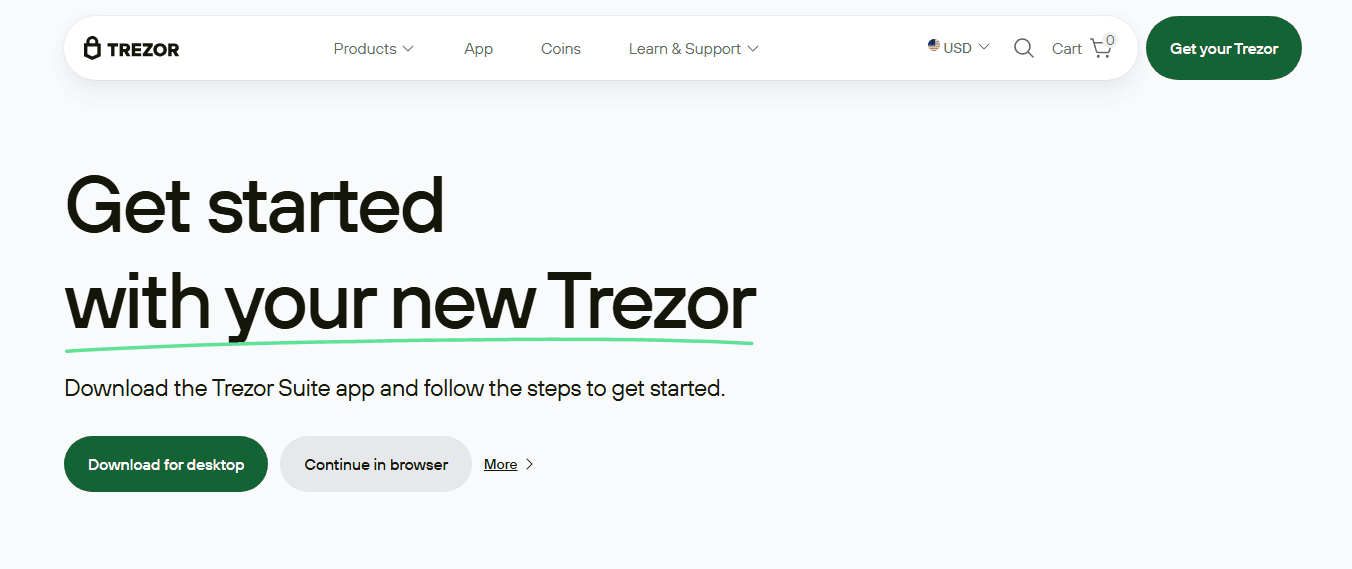
Trezor.io/start: Your Complete Beginner’s Guide to Crypto Security
Securing your cryptocurrency is crucial. Unlike software wallets, which are vulnerable to hacks and malware, Trezor hardware wallets keep your private keys offline. This means your crypto remains under your control and protected from online threats.
The official setup portal, Trezor.io/start, walks you through the entire process safely. In this guide, we’ll cover everything—from unboxing your device to sending and receiving cryptocurrency securely.
1. Understanding Trezor
A Trezor wallet is a small physical device designed to store cryptocurrency keys offline. Developed by SatoshiLabs, it combines convenience with strong security, letting you manage your digital assets safely.
Trezor Models
Trezor One: Compact, budget-friendly, beginner-oriented.
Trezor Model T: Advanced version with a touchscreen, extra coin support, and enhanced security features.
Trezor supports a wide range of cryptocurrencies, including Bitcoin, Ethereum, Litecoin, and many ERC-20 tokens.
2. Why Start at Trezor.io/start
Using Trezor.io/start ensures:
You download the official Trezor Suite software.
You avoid phishing attacks or fake apps.
You follow verified instructions for a secure setup.
This is the safest starting point for any Trezor wallet setup.
3. Preparing for Setup
Before you start, make sure you have:
Verify Your Device
Purchase from authorized retailers.
Ensure the packaging is sealed and untouched.
Prepare Your Computer
Use a secure, malware-free system.
Update your browser and operating system.
Recommended browsers: Chrome, Firefox, Edge.
Backup Materials
Keep the included recovery card.
Have a pen ready to record your 24-word recovery seed.
Never store your seed digitally or take pictures of it.
4. Step-by-Step Trezor Setup
Step 1: Connect Your Device
Visit Trezor.io/start.
Select your Trezor model.
Download and install Trezor Suite.
Connect your Trezor via USB.
The device screen will guide you through the setup.
Step 2: Create or Restore a Wallet
Create a new wallet: Generates a new private key and recovery seed.
Restore wallet: Enter an existing 24-word seed to recover a previous wallet.
New users should select Create a new wallet.
Step 3: Set a PIN
Enter a PIN directly on the device.
The layout changes each time to prevent keylogging.
Choose a strong PIN and avoid simple combinations like 1234.
Step 4: Record Your Recovery Seed
Write all 24 words in order on the recovery card.
Store it offline securely.
Do not photograph or save it digitally.
Step 5: Verify Your Seed
Trezor Suite will ask you to confirm the seed by selecting words in the correct order, ensuring your backup is accurate.
Step 6: Access Your Wallet
Once setup is complete:
View balances and portfolio.
Send and receive crypto securely.
Manage multiple accounts and track transactions.
5. Sending and Receiving Cryptocurrency
Receiving Crypto
Click Receive in Trezor Suite.
Choose the cryptocurrency.
Copy the wallet address or scan the QR code.
Verify the address on the device screen.
Sending Crypto
Click Send.
Enter the recipient’s address and amount.
Confirm the transaction on your Trezor.
Physical confirmation ensures security even if your computer is compromised.
6. Security Features
PIN protection prevents unauthorized access.
Optional passphrase provides extra security.
Recovery seed ensures wallet recovery.
Tamper-resistant hardware protects against physical attacks.
2FA support for compatible services.
7. Best Practices
Never share your recovery seed.
Store your seed offline in a secure location.
Keep firmware up to date.
Only use official apps and websites.
Test transactions with small amounts before sending larger sums.
8. Troubleshooting
Device not recognized: Try another USB port or cable; restart Trezor Suite.
Forgot PIN: Restore your wallet with your recovery seed.
Lost recovery seed: Funds cannot be recovered.
Firmware update failed: Retry using a stable internet connection.
9. Advanced Features
Multiple accounts: Organize different cryptocurrencies.
Shamir Backup (Model T): Split the recovery seed into multiple secure shares.
DeFi & Staking: Stake supported coins or access decentralized finance features via Trezor Suite.
10. Third-Party Wallet Integration
Trezor works with wallets like MetaMask, Electrum, and MyEtherWallet, offering advanced features while keeping private keys offline.
11. Keeping Your Trezor Secure
Do not lend or share your device.
Avoid phishing emails and suspicious links.
Keep firmware updated.
Use strong PINs and optional passphrases.
12. Conclusion
Setting up your Trezor via Trezor.io/start ensures your cryptocurrency is safe offline. By carefully following the setup steps and securing your recovery seed, you can confidently manage, send, and receive crypto.
Trezor is a secure, beginner-friendly solution for anyone looking to protect their digital assets.